By Macdonald Ebere, PhD
Few accusations are as casually deployed in Nigeria as this: “Politicians don’t have a conscience.” It is said at bus stops, in beer parlours and across social media timelines. It is uttered in anger after elections and in resignation before them. But like many clichés, it conceals a serious question beneath its rhetorical flourish: what place does conscience truly occupy in public life?
Conscience is not a uniform faculty. Moral theologians speak of it in shades. There is the lax conscience, which excuses almost everything; and there is the scrupulous conscience, which condemns almost everything. Between these extremes lies what Aristotle might have called the virtuous mean — a conscience properly formed, alert yet balanced, capable of guiding action without paralysing it.
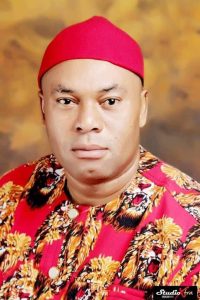
At the Catholic seminary, where I spent considerable time, conscience was not a slogan but a discipline. Each day began with meditation and ended with a careful examination of one’s actions. One asked, “Did I live up to the ideals I profess?” “Did I act from vanity or from purpose?” The practice was less about guilt than about awareness. It was training, the slow cultivation of moral attentiveness.
Politics, by contrast, is rarely associated with such introspection. It can be noisy, competitive and often transactional. In Nigeria, especially, public suspicion runs deep. Too often, political office is perceived less as a platform for service than as a ladder for personal advancement. The distance between campaign promises and governing realities fuels the impression that conscience has vacated the public square.
Yet it would be too convenient to declare that politicians simply lack one. Conscience does not evaporate upon swearing an oath of office. Rather, it is dulled or sharpened by the incentives that surround it. Where institutions are weak and accountability is inconsistent, self-interest flourishes. Where rules are enforced and public scrutiny is vigilant, moral restraint becomes rational.
The coming 2027 elections have already cast their long shadow. Alignments are forming. Aspirants are testing the waters. Familiar language about “service” and “transformation” fills the airwaves. There is nothing inherently wrong with ambition; indeed, democracy depends upon it. But ambition without moral clarity easily degenerates into entitlement.
The central question for any aspirant, whether for councillorship or the presidency, ought to be simple and severe: Why am I going there? Is it to serve, or to secure? To uplift, or to accumulate? These are not theological riddles. They are practical tests. A leader who seeks office merely to enrich himself and “children unborn” will inevitably treat public resources as private spoils. A leader who sees office as stewardship will approach power with caution and accountability.
Nigeria’s democratic journey has been turbulent but resilient. The peaceful transfer of power between parties, once unthinkable, has occurred. Electoral reforms, though imperfect, continue to evolve. Civil society and the media remain robust in scrutiny. These are not the marks of a conscience-free polity. They are evidence of a society wrestling, however noisily, with standards.
Still, the temptation to instrumentalise politics remains strong. In such an environment, conscience must work harder. It must resist the easy justifications: “Everyone does it.” “It is our turn.” “Politics is not for saints.” These phrases are less arguments than alibis.
But neither is politics for cynics. To dismiss all politicians as morally bankrupt is to abdicate civic responsibility. Democracies reflect the ethical expectations of their citizens. If voters reward short-term inducements over long-term vision, they should not be surprised when governance mirrors that preference. Conscience, in this sense, is collective before it is individual.
There is also a cultural dimension. Nigeria is a deeply religious society. Sermons on righteousness fill churches and mosques each week. Yet the translation of private piety into public ethics remains uneven. The examination of conscience must extend beyond personal morality into civic conduct. Paying taxes honestly, rejecting vote-buying, insisting on transparency — these are acts of public conscience as much as private virtue.
Critics argue that morality is a luxury in politics. Survival, they insist, requires toughness and compromise. They are partly right. Governance involves negotiation, pragmatism and, at times, unpleasant trade-offs. But there is a difference between compromise and capitulation. Conscience does not forbid hard decisions; it demands that they be justified by public good rather than private gain.
As 2027 approaches, Nigerians would do well to scrutinise not only manifestos but motivations. Aspirants should subject themselves to an internal audit more rigorous than any party screening committee could devise. Have they demonstrated integrity in smaller responsibilities? Have they managed resources transparently? Do their past actions align with their present rhetoric?
In the seminary, the day’s examination of conscience ended with a resolution, a concrete commitment to do better tomorrow. Perhaps Nigerian politics needs something similar: a culture in which reflection precedes ambition, and accountability follows power. Institutions can enforce compliance; only conscience can inspire character.
The charge that politicians lack conscience is therefore less a verdict than a warning. It signals a public hunger for ethical leadership. It challenges those who seek office to rise above the cynicism that surrounds them. And it reminds citizens that democracy is not merely a contest of numbers but a test of values.
Conscience may come in shades. It may be lax or scrupulous. But it can be trained. If Nigeria’s political class embraces that discipline, and if the electorate demands it, the familiar lament may yet give way to a quieter confidence: that public office, properly understood, is not an avenue for self-enrichment but a vocation of service.
The examination begins now.
_Ebere is a practical political philosopher and the chairman of APC, Imo State writes from Owerri.