BY COLLINS OPUROZOR
The passing of Reverend Jesse Jackson closes a towering chapter in the moral and political history of modern America. Yet even in death, his voice echoes; insistent, urgent, and hopeful, reminding us that a life is not measured by years alone but by the courage of its convictions and the deeds it leaves behind.
Jesse Jackson did not merely witness history. He bent its arc. From the streets of the American South to the halls of power in Washington, he stood as a tireless advocate for the marginalized, the poor, and the politically excluded. In an era when the struggle for civil rights demanded not only bravery but sacrifice, Jackson answered the call with a lifetime of relentless service. And so, the pulpit became a tool for so social justice and emblem of the people’s hope for a better life.
He emerged on the national stage alongside Martin Luther King Jr., absorbing the lessons of nonviolence, moral clarity, and mass mobilization. After King’s assassination, when many wondered who would carry the torch, Jackson stepped forward not as a replacement but as a continuation of a movement that refused to die. He took the language of civil rights and expanded it into the language of economic justice, political representation, and global human dignity.
Through the founding of Operation PUSH and the Rainbow Coalition, Jackson transformed protest into policy and activism into political participation. He helped millions believe that democracy was not a spectator sport. He urged the disenfranchised to vote, to organize, and to demand a seat at the table. His presidential campaigns in 1984 and 1988 were more than political contests. They were civic awakenings that reshaped American electoral politics and expanded the imagination of what was possible for Black Americans and other minorities.
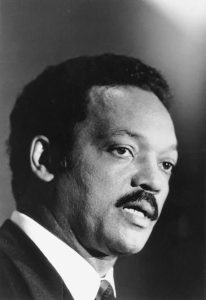
Jackson’s life was not without controversy or criticism. No life lived so visibly and so vigorously ever is. Yet even his critics often conceded the depth of his commitment to justice and the breadth of his influence. He negotiated for peace abroad, advocated for prisoners and hostages, and stood in solidarity with struggles across continents. His moral reach extended far beyond the borders of the United States, making him a global symbol of conscience and compassion.
His legacy can be seen in the generations of leaders he inspired, including the rise of figures such as Barack Obama, whose own ascent to the presidency stood on the shoulders of those who first dared to run when victory seemed improbable. Jackson made it possible for many to dream aloud, and then to act.
Perhaps his greatest lesson was personal and timeless. Service outlives celebrity, and character outlives controversy. He taught that a life committed to lifting others will always stand as a monument stronger than marble. He believed that hope is a discipline, justice a duty, and equality a cause worth every ounce of human effort.
Today, as the world reflects on his journey, we are reminded that history remembers not the comfort we sought but the courage we showed. Jesse Jackson’s deeds: marches taken, speeches delivered, battles fought, and bridges built, form a legacy that will continue to challenge and inspire.
In the end, Jesse Jackson lived by a simple truth. We are remembered not by the titles we held but by the lives we touched and the justice we pursued. By that measure, his memory will endure for generations.